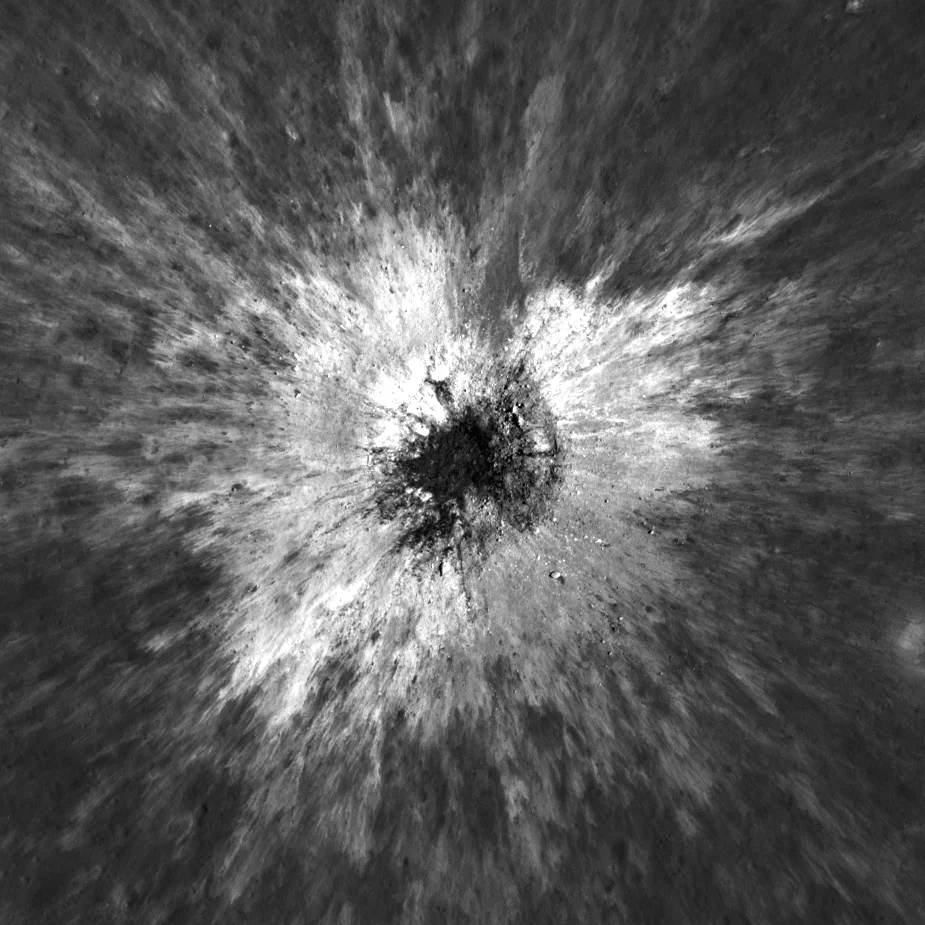
Each day, the NASA APOD archive turns a different corner of the cosmos into a brief, human-sized window on the universe. Today’s image, “A New Lunar Crater: McGetchin”, is a reminder that even a single observation can carry a surprisingly long story.
Credit: NASA APOD
A once-in-a-lifetime crater has appeared on the Moon! A comet or asteroid roughly the size of a humpback whale (approximately 10-20 meters, 30-60 feet) crashed into the Moon sometime between April and May of 2024. The Lunar Reconnaissance Orbiter (LRO), with its monthly monitoring of the Moon, captured today’s images of the lunar surface before and after the event. The resulting crater, named after Apollo-era lunar scientist McGetchin, is two soccer fields across. Craters of this size are only expected once every 132 years! Follow up thermal imaging revealed a large cold spot that surrounds the warm crater. Surface impacts will puff up the loose lunar sediment, or regolith, making it…
Why it caught my attention
This image stands out because it gives a compact view of a process or object that is easy to overlook when the sky is treated as a background. The science is not a dramatic narrative invented after the fact; it is the reason the observation matters in the first place: a structure, an event, or a field captured with enough clarity to reward a second look.
Source data: NASA APOD.
Comments
Sign in with your GitHub account to leave a comment or a reaction.